 Home
Home


For further details, please contact us.
Contact Us
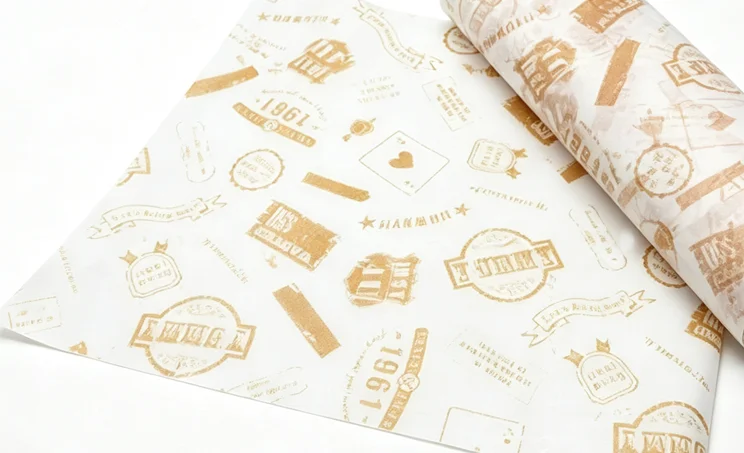
You’ve designed the perfect branded burger wrapper—vibrant colors, crisp logo, just the right amount of appetite appeal. But when it hits the press line, the ink bleeds, the colors shift, or worse, the grease from the burger seeps through and ruins the entire presentation. Printing on food-contact paper isn’t the same as printing on labels or cartons. The substrate is lightweight, highly absorbent, and must meet strict food safety standards.
This guide walks you through the technical decisions—from paper selection to press setup—that determine whether your burger wrapper prints clean, stays safe, and performs on the line.
Choosing the Right Paper: The Foundation of Quality Printing
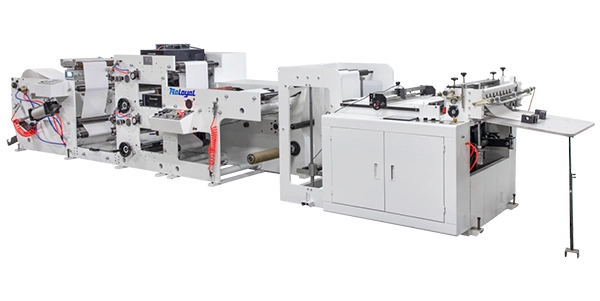
The single most important decision in burger wrapper printing is paper selection. Flexographic printing places unique demands on paper: surface smoothness, absorbency, tensile strength, and ink control all become critical at speed. Choose wrong, and no amount of press calibration will save the job.
Key paper properties for flexo compatibility:
| Property | Why It Matters for Burger Wrappers |
| Porosity | Too high = ink bleeds into the fiber; too low = ink smears and fails to dry |
| Surface smoothness | Critical for tight registration and clean halftones—especially important for fine brand logos |
| Grammage (basis weight) | Burger wrappers typically range from 30–60 gsm; lighter papers run faster but are more prone to wrinkling |
| Grease resistance (Kit rating) | Measured by TAPPI T 559 standard; burgers typically require Kit 5–7; fried foods need Kit 7–9 |
| Tensile strength | Must withstand web tension during high-speed printing; minimum 1 kN/m, typically around 2.0 kN/m |
Paper types commonly used for burger wrappers:
-
Greaseproof paper (30–70 gsm): Machine-finished, low porosity, naturally oil-resistant. Preferred for direct food contact.
-
PE-coated paper (30–80 gsm): Adds a moisture barrier but requires specific ink formulations for adhesion.
-
Bleached kraft: Offers strength and a clean white surface for brand colors; works well with water-based inks.
When evaluating paper suppliers, ask for the Kit rating and Cobb value (water absorption). A burger wrapper that looks great off the press but fails the grease test on the counter is a branding disaster waiting to happen.
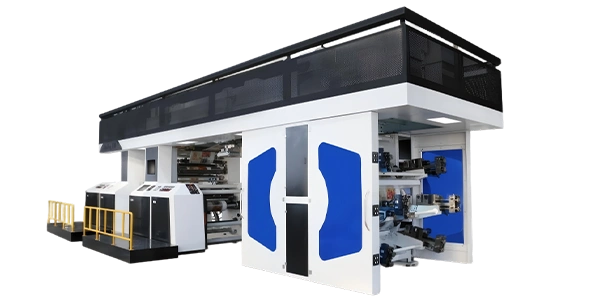
For a deeper look at paper compatibility across different flexo press configurations, explore the stack flexo printing machines series designed for various paper grades and production volumes.
Food Safety First: Ink Selection and Regulatory Compliance
Burger wrappers are food-contact materials. The ink on the outside of the wrapper may not touch the food directly, but migration—ink components transferring through the paper—is a real and regulated risk. According to EFSA guidance, inks for food packaging must be formulated for indirect food contact unless a functional barrier is present. Printing inks used on food packaging must be non-toxic and non-injurious to health.
What to look for in food-safe flexo inks:
| Ink Type | Best For | Key Consideration |
| Water-based inks | Absorbent papers like uncoated kraft and greaseproof | Low VOC, food-compliant formulations available; moderate drying speed |
| UV flexo inks | Coated papers and films | Require smooth, sealed surface; no absorption needed |
| Low-migration inks | Any food-contact application | Specifically designed to minimize chemical transfer to food |
Regulatory frameworks to know:
-
FDA: Printing inks that are reasonably expected to migrate to food must be cleared by the FDA and subject to safety and migration assessments. The FDA also provides guidance on lead in food packaging—lead-based inks are subject to state Toxics in Packaging legislation.
-
EU Framework: Regulation (EU) 2023/2006 governs good manufacturing practices for food contact materials.
-
China: GB/T 36392-2025 (food packaging laminated paper and board) and GB/T 17934.6-2025 (process control for flexographic printing) are key national standards.
Critical rule: The printed surface should not come into direct contact with food. Even with food-safe inks, the ink layer belongs on the outside of the wrapper.
For industry-specific guidance on food-safe printing, refer to the solutions page for Stack Flexo Printing Machine applications.
Press Setup and Process Control for Burger Wrapper Printing
Once the paper and ink are specified, the printing process itself determines success or failure. Flexographic printing on lightweight, absorbent paper requires precise control across multiple variables.
The 5-step setup checklist:
-
Tension control — Lightweight papers (30–60 gsm) are prone to stretching and web wandering at high speeds. Insufficient tension causes wrinkling; excessive tension causes elongation and registration drift. Advanced closed-loop tension control systems that automatically adapt to substrate thickness and elasticity are essential.
-
Anilox roller selection — The anilox roller meters ink onto the printing plate. For absorbent papers, a lower line count (higher ink volume) may be needed to achieve solid coverage without starving the paper. For detailed graphics and fine text, a higher line count delivers sharper reproduction.
-
Ink viscosity management — Viscosity that’s too high leads to poor transfer and dot bridging; too low causes edge diffusion and washed-out colors. Water-based inks on absorbent paper are particularly sensitive to viscosity fluctuations.
-
Drying system calibration — Burger wrapper paper runs at speeds that can exceed 150 m/min on modern flexo presses. The drying system must match the speed—insufficient drying causes set-off (ink transferring to the back of the next wrapper), while excessive heat can curl or make the paper brittle.
-
Registration precision — With modern servo-driven presses achieving ±0.075 mm to ±0.1 mm registration accuracy, multi-color brand logos stay sharp. But this precision requires stable web handling and consistent paper caliper.
Common problems and their root causes:
| Problem | Likely Cause | Solution |
| Ink bleeding/edge diffusion | Paper too porous, or ink viscosity too low | Adjust anilox roller; increase ink viscosity; pre-test paper |
| Poor ink adhesion/smudging | Surface energy too low; wrong ink for substrate | Request flexo-treated paper; switch ink type |
| Color inconsistency | Paper absorbency variation across the roll | Specify uniform caliper; check paper lot consistency |
| Web wrinkling | Uneven tension or paper curl | Check tension zones; condition paper in print room (19–23°C, 50% RH) |
Storage matters: Paper should be stored at 50% relative humidity and 19–23°C. If stored in non-air-conditioned conditions, allow a stabilization period in the print room before running.
Real-World Application Scenarios
Scenario A: Fast-food chain launch — high volume, consistent branding
A national QSR chain needs 50 million burger wrappers with a 4-color brand logo and promotional messaging. The wrapper must hold together during assembly and resist grease stains for at least 15 minutes.
-
Paper: 38–40 gsm greaseproof, Kit 5–7 rating
-
Ink: Water-based, food-contact compliant
-
Press: CI flexo press with ±0.075 mm registration, 500 m/min capability for maximum throughput
-
Critical factor: Tension control and drying—at high speed, any deviation compounds across millions of impressions
Scenario B: Artisanal burger brand — premium finish, sustainability focus
A boutique brand wants a natural, unbleached look with a single-color logo. Sustainability is the message.
-
Paper: Unbleached kraft, 45–60 gsm, natural brown appearance
-
Ink: Soy-based or bio-based, FDA-compliant
-
Press: Stack or inline flexo with 1–2 color capacity
-
Critical factor: Ink adhesion on absorbent kraft surface; proper surface treatment may be needed
Quality Control: From Proof to Production
Quality doesn't start on the press—it starts with proofing and testing.
Pre-production checks:
-
Proof the ink on the actual substrate — Not on a sample sheet from a different lot. Paper properties vary between batches.
-
Test grease resistance — Run the Kit test (TAPPI T 559) on printed samples. The coating or ink layer can affect the paper's oil barrier properties.
-
Check color accuracy — Target ΔE ≤3 vs Pantone reference for brand color fidelity.
-
Rub test — Verify no smudging or peeling under simulated handling conditions.
In-process monitoring:
-
Register control — Check at start-up and periodically throughout the run
-
Color density — Monitor with a densitometer; adjust ink feed as needed
-
Web tension — Watch for drift; automatic tension control systems reduce operator intervention
Industry standards for reference:
-
ISO 12647-6:2020 specifies requirements for four-color flexographic printing of packaging materials
-
GB/T 17497 covers requirements for flexographic decorative printed matter on paper
-
ProcessStandard Flexo (PSF) by Fogra provides a structured approach for color-accurate, process-controlled flexo production
Next Steps: From Guide to Equipment Selection
By now, you should have a clear framework for evaluating your burger wrapper printing project: paper type and grammage, ink chemistry and food-safety compliance, press setup parameters, and quality control protocols. The next logical step is matching these requirements to the right production equipment.
Different press configurations serve different needs:
-
High-volume, consistent runs → CI flexo presses with central impression drums for precise registration
-
Flexible, shorter runs with quick changeovers → Inline or stack configurations
-
Wide-format or specialty substrates → Bridge-type presses for broader web widths
Review the stack flexo printing machine series to understand which configuration aligns with your production volume, substrate range, and quality requirements. If you need tailored guidance for your unique project, expert technical consultation on press model selection, and equipment setup.
Related Reading
-
How to Choose the Right Flexo Press for Food Packaging Applications
-
Paper Substrate Selection Guide for Flexographic Printing
-
Food-Safe Inks for Flexible Packaging: A Regulatory Overview
-
Troubleshooting Common Flexo Printing Defects on Lightweight Paper
-
CI vs Stack vs Inline Flexo Presses: Which Fits Your Production Line?