

 Home
Home


For further details, please contact us.
Contact Us
Complete Guide to Flexo Printing Machines: Types, Technology and Buying Tips
Direct Answer Summary
A flexo printing machine is a roll-to-roll or sheet-fed printing press that uses flexible printing plates, anilox rollers, controlled ink transfer and drying systems to print on films, paper, labels, foil, non-woven materials and packaging substrates. It is widely used for flexible packaging, labels, paper packaging, food packaging, medical packaging and industrial converting.
The right flexo printing machine depends on the material you print, the required web width, printing speed, number of colors, registration accuracy, automation level and downstream converting process. CI flexo presses are often preferred for thin films and flexible packaging, inline flexo presses are suitable for label production and integrated finishing, stack flexo presses are cost-effective for paper and general packaging, while bridge-type flexo presses support wider materials and industrial packaging applications.
Raloyal provides flexo printing and converting equipment for packaging and label producers, supported by in-house core component manufacturing, servo technology, precision registration control and global service support.
What This Guide Covers
This guide helps packaging converters, label printers and industrial material processors understand:
-
What a flexo printing machine is
-
How flexo printing works
-
Main types of flexo presses
-
Differences between CI, inline, stack and bridge-type flexo machines
-
How to select a flexo printing machine for different materials
-
Which machine is suitable for flexible packaging, labels, paper packaging and industrial applications
-
What configuration details should be confirmed before requesting a machine proposal
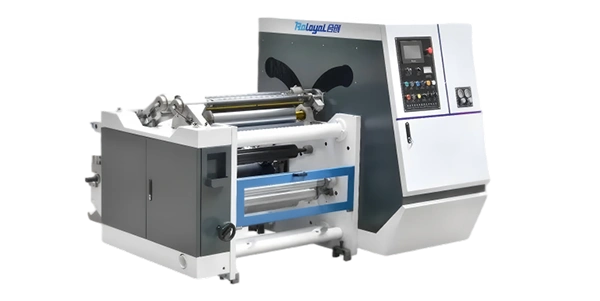
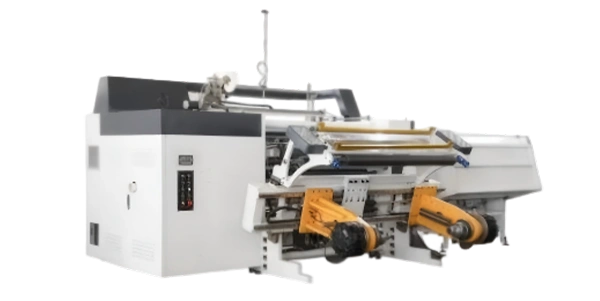
For detailed product categories, you can also explore Raloyal’s flexo printing and slitting machines.
What Is a Flexo Printing Machine?
A flexo printing machine, also called a flexographic printing press or flexo press, is a printing machine that uses flexible relief plates to transfer ink onto a substrate. The ink is first metered by an anilox roller, transferred to the printing plate and then printed onto the material as it passes through the printing unit.
Flexo printing is widely used because it can print on many types of materials, including:
-
BOPP film
-
PET film
-
PE film
-
CPP film
-
Paper
-
Paperboard
-
Self-adhesive label stock
-
Aluminum foil
-
Laminated materials
-
Non-woven materials
-
Kraft paper
Compared with some other printing methods, flexo printing offers a strong balance of speed, material adaptability, production efficiency and cost control. This makes it suitable for both packaging manufacturers and label producers that need stable roll-to-roll production.
How Does a Flexo Printing Machine Work?
A flexo printing machine works through a continuous material handling and ink transfer process. Although machine structures differ by model, most flexo presses follow a similar production flow.
1. Unwinding
The parent roll is loaded onto the unwind unit. Stable unwinding is important because web tension affects print registration, material stretch and final roll quality.
2. Web Tension Control
The substrate passes through tension control zones. For thin films and stretch-sensitive materials, stable tension is essential to prevent deformation and registration errors.
3. Printing Unit
Each printing unit applies one color. A multi-color flexo press may include 4, 6, 8, 10 or more printing units depending on the product design and production requirements.
4. Anilox Roller
The anilox roller controls ink volume. Its cell volume and line count influence color density, ink transfer consistency and printing quality.
5. Doctor Blade System
The doctor blade removes excess ink from the anilox roller, allowing a controlled amount of ink to transfer to the plate.
6. Printing Plate
The flexible printing plate carries the raised image area. It transfers ink onto the substrate under controlled pressure.
7. Drying System
After each printing station or printing section, the ink must dry or cure properly. Drying performance affects speed, ink adhesion and final print quality.
8. Rewinding or Inline Finishing
After printing, the material may be rewound, slit, die-cut, inspected or converted depending on the production line configuration.
Main Types of Flexo Printing Machines
Different flexo machines are designed for different materials, production speeds, applications and investment levels. Selecting the correct type is more important than simply choosing a higher-speed machine.
CI Flexo Printing Machine
A CI flexo printing machine uses a central impression drum. Multiple printing units are arranged around one large central drum, and the substrate stays supported by the drum during printing.
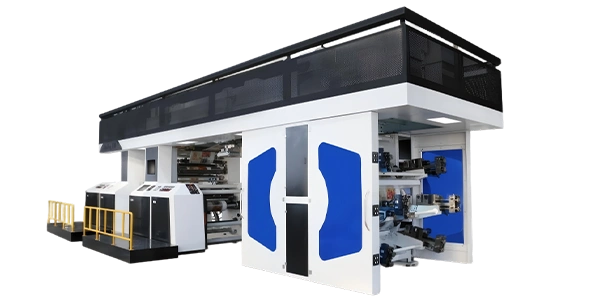
CI flexo presses are commonly used for:
-
Flexible packaging film
-
Food packaging
-
Medical packaging
-
Beverage packaging
-
Shrink sleeves
-
Laminated packaging materials
-
High-speed roll-to-roll production
The key advantage of CI flexo is registration stability, especially when printing thin or stretch-sensitive materials.
Recommended page:
Inline Flexo Printing Machine
An inline flexo printing machine arranges printing units in a straight line. It is widely used for label printing and applications that require inline finishing, such as die cutting, slitting, inspection or rewinding.
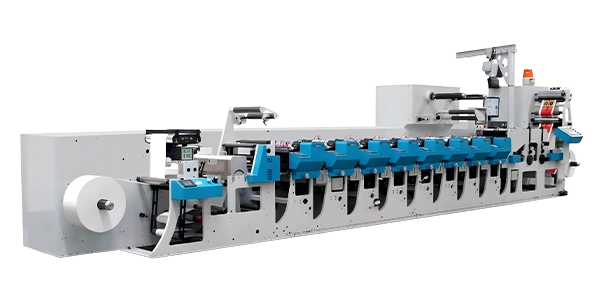
Inline flexo presses are commonly used for:
-
Self-adhesive labels
-
Film labels
-
Paper labels
-
Short-run label production
-
Variable product formats
-
Inline die-cutting and finishing
The main advantage of inline flexo is process integration. Printing and finishing can be combined in one production line, reducing handling and improving efficiency.
Recommended page:
Inline Flexo Printing Machines
Stack Flexo Printing Machine
A stack flexo printing machine has printing units stacked vertically or arranged in a tower structure. It is often used for paper packaging, shopping bags, paper cups, wrappers and other less stretch-sensitive substrates.
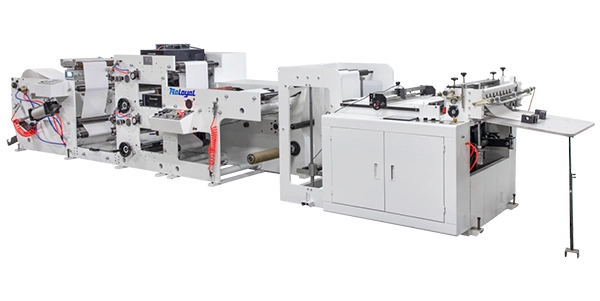
Stack flexo presses are commonly used for:
-
Paper packaging
-
Paper cups
-
Burger wrappers
-
Paper bags
-
Self-adhesive labels
-
General packaging materials
The main advantage of stack flexo is cost efficiency. It can be a practical option for producers that need reliable printing performance with a more economical machine structure.
Recommended page:
Bridge-Type Flexo Printing Machine
A bridge-type flexo printing machine is designed for wider materials and industrial packaging applications. It is often used when the substrate is wider, heavier or requires stronger web handling.
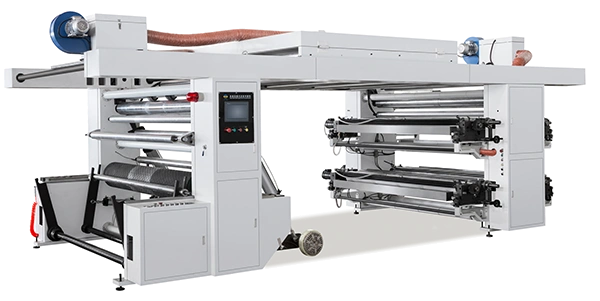
Bridge-type flexo presses can be used for:
-
Kraft paper
-
Non-woven materials
-
Industrial bags
-
Cement sacks
-
Shopping bags
-
Wide web packaging materials
The main advantage is stable handling of larger substrates and industrial material formats.
Recommended page:
Bridge-Type Flexo Printing Machines
CI Flexo vs Stack Flexo vs Inline Flexo
The following table gives a simplified comparison for buyers who are choosing between different flexo press structures.
| Comparison Point | CI Flexo Printing Machine | Stack Flexo Printing Machine | Inline Flexo Printing Machine |
|---|---|---|---|
| Best Application | Flexible packaging and film printing | Paper packaging and general packaging | Labels and inline finishing |
| Typical Materials | BOPP, PET, PE, CPP, laminated film, foil | Paper, paperboard, kraft paper, label stock | Self-adhesive paper, film labels, label stock |
| Registration Stability | High, especially for stretch-sensitive films | Moderate to good depending on material | High for narrow web label production |
| Production Speed | Suitable for high-speed roll-to-roll production | Suitable for medium-speed production | Suitable for flexible label jobs and quick changeovers |
| Web Path | Shorter and more stable around central drum | Longer than CI structure | Modular inline web path |
| Cost Level | Higher investment | More economical | Medium to high depending on finishing modules |
| Main Buyer Type | Flexible packaging converter | Paper packaging producer | Label printer or converter |
| Downstream Process | Slitting, lamination, bag making | Cutting, stacking, rewinding | Die cutting, slitting, inspection, rewinding |
In general, CI flexo is preferred for flexible packaging film, inline flexo is preferred for label production, and stack flexo is preferred for cost-effective paper packaging and general printing applications.
How to Choose the Right Flexo Printing Machine
A good flexo printing machine selection should start from the final product, not from the machine model. Before choosing a machine, buyers should confirm the following factors.
1. Material Type
Different substrates behave differently during printing.
Thin films such as BOPP, PET and PE require stable tension control and registration accuracy. Paper and paperboard are usually less stretch-sensitive but may require strong ink coverage and stable feeding. Labels may require inline die cutting, slitting and inspection.
Key question:
What material will be printed most frequently?
2. Product Application
The final product strongly affects machine selection.
Flexible packaging may require a CI flexo press. Self-adhesive labels may require an inline flexo press. Paper cups, wrappers or kraft paper bags may be better suited to stack or bridge-type flexo structures.
Key question:
Will the machine produce flexible packaging, labels, paper packaging or industrial packaging?
3. Printing Width
Printing width affects production efficiency, layout, material waste and future order flexibility. Wider machines can handle larger rolls but require higher investment and stronger material handling.
Key question:
What is the parent roll width and finished product size?
4. Printing Speed
Higher speed can improve output, but speed should match material behavior, drying capacity, operator skill and order type. For short runs, fast changeover may matter more than maximum speed.
Key question:
Is the priority high-speed long-run production or flexible short-run production?
5. Number of Colors
The required number of printing units depends on packaging design, brand colors, spot colors, white ink, varnish and future order requirements.
Key question:
Do your jobs usually need 4, 6, 8 or more colors?
6. Registration Accuracy
Registration accuracy is critical for multi-color graphics, fine text, barcodes and premium packaging. For thin film packaging, registration stability depends on machine structure, servo control, tension control and drying conditions.
Key question:
What print tolerance does your product require?
7. Automation Level
Automation can reduce setup waste, improve consistency and make operation easier. Common options include automatic tension control, automatic registration, automatic roll change, video inspection and inline finishing.
Key question:
Do you need lower labor dependency, faster setup or more stable long-run production?
8. Downstream Converting
Printing is often only one part of the production process. Many buyers also need slitting, rewinding, die cutting, inspection, lamination or bag making.
Key question:
Should the machine work as a standalone press or as part of a complete printing and converting line?
Flexo Printing Applications
Flexo printing is used across multiple packaging and converting industries. Each application requires a different machine path.
Flexible Packaging
Flexible packaging includes food packaging, beverage packaging, medical packaging, shrink sleeves, pouches and consumer goods packaging. These applications often use thin films and laminated materials.
Recommended machine path:
CI Flexo Printing Machine
+
Wide Web Slitting Machine
+
Inspection or downstream converting
Related page:
Label Printing
Label printing includes self-adhesive labels, film labels, paper labels, beverage labels, cosmetic labels and industrial labels.
Recommended machine path:
Inline Flexo Printing Machine
+
Rotary Die Cutting
+
Inspection
+
Narrow Web Slitting or Rewinding
Related page:
Paper Packaging
Paper packaging includes paper cups, paper bags, burger wrappers, sheets, kraft paper and coated paper packaging.
Recommended machine path:
Stack Flexo Printing Machine
or
Bridge-Type Flexo Printing Machine
+
Cross cutting or rewinding
Related page:
Industrial Packaging
Industrial packaging includes non-woven bags, kraft paper sacks, cement bags, shopping bags and other large-format materials.
Recommended machine path:
Bridge-Type Flexo Printing Machine
+
Wide Web Slitting or Rewinding
Related page:
Recommended Machine Path by Buyer Need
| Buyer Need | Recommended Machine Type | Why It Fits |
|---|---|---|
| Thin film flexible packaging | CI Flexo Printing Machine | Better web stability and registration control |
| Food or medical packaging film | CI Flexo Printing Machine | Suitable for high-quality multi-color film printing |
| Self-adhesive labels | Inline Flexo Printing Machine | Supports inline die cutting and finishing |
| Paper cup or wrapper printing | Stack Flexo Printing Machine | Practical structure for paper packaging |
| Non-woven or kraft paper bags | Bridge-Type Flexo Printing Machine | Handles wider and heavier materials |
| Printed roll converting | Wide Web Slitting Machine | Converts large rolls into required widths |
| Finished label rolls | Narrow Web Slitting Machine | Suitable for label roll finishing |
Technical Configuration Checklist
Before requesting a flexo printing machine proposal, prepare the following information. This helps engineers recommend the correct machine structure and configuration.
| Item | What to Confirm |
|---|---|
| Material | BOPP, PET, PE, paper, foil, label stock, non-woven or kraft paper |
| Material thickness | Minimum, maximum and common thickness range |
| Parent roll width | Maximum roll width before printing |
| Finished product | Pouch, label, wrapper, bag, sleeve, paper cup or other product |
| Printing colors | 4, 6, 8, 10 or more colors |
| Printing speed | Target production speed and daily output |
| Registration requirement | Required tolerance for multi-color printing |
| Ink and drying | Water-based ink, solvent ink, UV ink or other process |
| Roll diameter | Unwind and rewind roll diameter requirements |
| Automation | Tension control, auto registration, inspection, auto roll change |
| Downstream process | Slitting, die cutting, lamination, rewinding or bag making |
| Installation country | Voltage, standards, service and shipping requirements |
Common Flexo Printing Problems and Solutions
| Problem | Possible Cause | Machine or Process Solution |
|---|---|---|
| Registration deviation | Unstable web tension, material stretch or poor servo response | Use stable tension control, servo registration and suitable machine structure |
| Ink transfer inconsistency | Incorrect anilox selection, doctor blade issue or ink viscosity variation | Match anilox specifications, maintain doctor blade system and control ink conditions |
| Film stretching | Thin film tension fluctuation or high drying temperature | Use closed-loop tension control and optimized drying settings |
| Poor drying | Insufficient drying capacity or high printing speed | Match drying system with ink type, speed and material |
| Roll wrinkles | Uneven tension or poor web guiding | Improve web guiding and tension zone control |
| High setup waste | Manual adjustment and slow registration setup | Use automatic registration and repeatable settings |
| Poor finished roll quality | Unstable rewinding tension or inaccurate slitting | Add suitable slitting and rewinding configuration |
Why Choose Raloyal Flexo Printing Machines?
Raloyal focuses on flexo printing and converting equipment for packaging and label producers. Instead of only assembling machine parts, Raloyal maintains in-house manufacturing of key components such as gears, shafts and wall panels, helping improve machine consistency, spare parts control and long-term service support.
Raloyal flexo printing solutions are built around practical buyer needs:
-
Flexo printing machines for flexible packaging, labels, paper and industrial materials
-
In-house core component manufacturing
-
Self-developed servo drive technology
-
High registration accuracy for demanding printing applications
-
Integrated printing and converting line options
-
Machine recommendations based on material, width, speed and application
-
Global service support, commissioning and spare parts supply
For buyers comparing different machine types, Raloyal can help evaluate whether a CI flexo press, inline flexo press, stack flexo press, bridge-type flexo press or slitting solution is more suitable for the production goal.
Related Articles
The following supporting articles can be linked from this guide as the first-month content cluster is built:
-
What Is a Flexo Printing Machine and How Does It Work?
-
Flexographic Printing Process Explained: From Ink Transfer to Finished Product
-
Flexo Printing Machine Components Explained: Anilox Roller, Doctor Blade and Printing Units
-
Flexo Printing vs Rotogravure Printing: Which Is Better for Packaging?
-
What Materials Can Be Printed With Flexo Printing Machines?
-
How Does Servo Technology Improve Flexo Printing Accuracy?
-
Flexo Printing Machine Applications in Flexible Packaging and Label Production
-
CI Flexo Printing Machine Explained: Structure, Advantages and Applications
-
CI Flexo vs Stack Flexo: Which Printing Machine Should You Choose?
-
How to Choose a Flexo Printing Machine Manufacturer?
Related Product Categories
Explore the product categories related to this guide:
FAQ
What is a flexo printing machine used for?
A flexo printing machine is used to print on roll or sheet materials such as plastic film, paper, labels, foil, non-woven fabric and packaging substrates. It is widely used for flexible packaging, label printing, paper packaging and industrial converting.
What is the difference between a flexo press and a flexographic printing machine?
A flexo press and a flexographic printing machine usually refer to the same type of equipment. “Flexo press” is the shorter industry term, while “flexographic printing machine” is the more descriptive term.
Which flexo machine is best for flexible packaging?
A CI flexo printing machine is usually recommended for flexible packaging, especially when printing on thin films such as BOPP, PET, PE and laminated materials. The central impression drum helps improve web stability and registration accuracy.
Which flexo machine is best for label printing?
An inline flexo printing machine is commonly used for label printing because it can integrate printing, die cutting, slitting, inspection and rewinding in one production line.
What is the difference between CI flexo and stack flexo?
CI flexo uses a central impression drum and is preferred for flexible packaging films that require stable registration. Stack flexo uses stacked printing units and is often more economical for paper packaging and less stretch-sensitive materials.
What materials can be printed with flexo printing machines?
Flexo printing machines can print on BOPP, PET, PE, CPP, paper, paperboard, self-adhesive label stock, aluminum foil, laminated film, kraft paper and non-woven materials.
How many colors does a flexo printing machine need?
The required number of colors depends on the packaging design. Simple jobs may use 4 colors, while premium packaging, white ink, spot colors or complex graphics may require 6, 8, 10 or more printing units.
What affects flexo printing registration accuracy?
Registration accuracy is affected by machine structure, servo control, web tension, material stability, printing speed, drying temperature, plate quality and operator setup.
Is flexo printing suitable for short-run production?
Flexo printing can be used for short runs, especially with inline flexo machines and efficient changeover systems. However, digital printing may still be more suitable for very short runs or variable data jobs.
Is flexo printing suitable for food packaging?
Yes. Flexo printing is widely used for food packaging films, paper wrappers, beverage packaging and other food-related packaging. The correct ink, drying system and material handling configuration should be selected according to the packaging requirements.
What information should I provide before requesting a flexo machine quote?
You should provide material type, web width, product application, printing colors, speed requirement, roll diameter, drying process, automation needs and downstream converting requirements.
Can one supplier provide both printing and slitting equipment?
Yes. For many packaging projects, printing and slitting need to work together. Raloyal provides flexo printing machines and slitting machines for integrated printing and converting requirements.
How do I choose between CI, inline, stack and bridge-type flexo?
Choose based on your material and product. CI flexo is suitable for flexible packaging film, inline flexo for labels, stack flexo for paper packaging and bridge-type flexo for wider or industrial materials.
Why is in-house manufacturing important for flexo printing machines?
In-house manufacturing of key parts helps improve consistency, quality control, spare parts availability and long-term service support. It also helps the manufacturer respond better to customized machine requirements.
How can Raloyal help with machine selection?
Raloyal can review your material, printing width, color requirement, production speed and final product, then recommend a suitable flexo printing machine or complete printing and converting line.
Request a Flexo Printing Machine Recommendation
Not sure whether you need a CI flexo press, inline flexo press, stack flexo press or complete printing and converting line?
Send your material, web width, printing colors, target product and production speed to Raloyal. Our team will help you compare machine options and recommend a configuration that matches your production needs.