

 Home
Home


For further details, please contact us.
Contact Us
Flexible packaging—stand-up pouches, shrink sleeves, medical barrier films, and food wrappers—demands print quality that is both vibrant and consistent across long production runs. Yet for converters working with thin, stretch-sensitive materials like BOPP, PET, or PE film, maintaining perfect multi-color registration is a constant challenge. The central impression (CI) flexo press emerged as the industry's answer to this challenge. This article explains the core principles of CI flexo technology, why it dominates flexible packaging printing, and how to evaluate whether it fits your production needs.
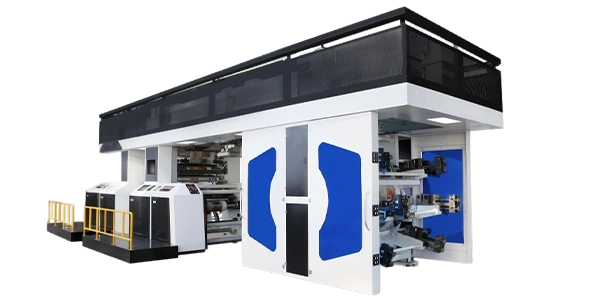
What Is CI Flexo Technology?
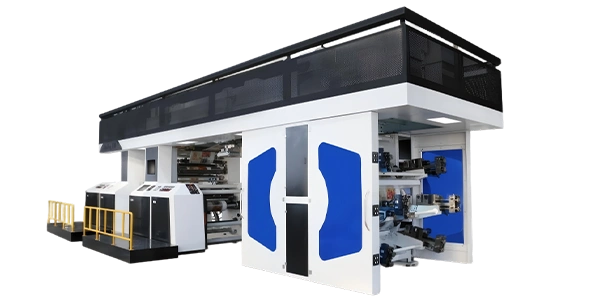
CI flexo technology refers to a flexographic printing press architecture in which all printing stations are arranged around a single, large-diameter central impression drum. The substrate—whether film, foil, or paper—wraps around this drum and maintains continuous contact with it as it passes through each color station in sequence.
What sets CI flexo apart architecturally:
| Feature | CI Flexo Press | Stack Flexo Press | Inline Flexo Press |
|---|---|---|---|
| Station layout | All stations around one central drum | Stations stacked vertically | Stations arranged horizontally in a line |
| Substrate path | Continuous contact with drum | Travels between independent stations | Travels between independent stations |
| Registration accuracy | ±0.075 mm | Moderate | Moderate |
| Typical speed | Up to 500 m/min | 150–250 m/min | 200–400 m/min |
| Best for | Thin films, high-volume flexible packaging | Paper, simple labels, moderate precision | Labels, paper, short-to-medium runs |
The central drum eliminates the fundamental weakness of other architectures: the cumulative tension variation that occurs when a substrate travels between independently mounted print stations. On extensible films—materials that can stretch significantly under tension—this structural difference is the difference between acceptable and exceptional print quality.
To explore the specific configurations available for different production volumes and substrate types, refer to the CI flexo printing machine series overview for detailed specifications.
How CI Flexo Technology Solves the Three Core Challenges of Flexible Packaging Printing
Flexible packaging printing presents three persistent technical challenges. CI flexo technology addresses each through its mechanical design.
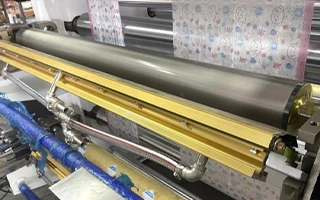
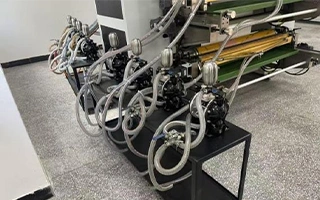
Registration Accuracy on Stretchable Films
The problem: Thin films like PE, BOPP, and PET stretch under tension. In a stack or inline press, each independent print station introduces its own nip pressure and tension variation. By the time the substrate reaches the sixth or eighth color, cumulative misregistration can exceed acceptable tolerances—resulting in ghosting, color bleeding, or rejected batches.
How CI flexo solves it: Because the substrate is mechanically constrained against the CI drum throughout the entire print sequence, stretch is virtually eliminated between stations. Modern CI presses with full-servo drive systems and high-resolution encoders achieve registration accuracy of ±0.075 mm. At production speeds up to 500 meters per minute, this level of precision means that fine-line graphics, process color blends, and reverse-printed text remain crisp and aligned.
What this means for your production: Less waste from misregistered prints, fewer rejected batches, and the ability to take on higher-value work that demands tight tolerances.
Tension Stability Across the Web
The problem: Tension fluctuations cause material stretching, deviation, and wrinkling—especially on thin films. These defects compromise print quality and reduce yield.
How CI flexo solves it: The CI architecture, combined with closed-loop tension control systems, maintains stable web tension from unwind to rewind. The substrate never loses contact with the drum, eliminating the tension spikes that occur when a web travels between independent stations. High-precision web guiding systems further ensure that the material tracks straight through the press, effectively avoiding deviation and wrinkling.
What this means for your production: Consistent print quality across the full web width, reduced material waste, and the ability to run thinner, more cost-effective films without sacrificing quality.
Thermal Stability During Long Runs
The problem: As a press runs, heat builds up—from friction, from drying systems, and from the printing process itself. Thermal expansion can change the effective diameter of rollers and drums, gradually shifting registration. In stack and inline presses, each station operates in its own thermal micro-environment, making consistent ink behavior across the color sequence difficult to achieve.
How CI flexo solves it: The CI central drum features an internal water-cooling system that maintains a constant surface temperature. This prevents thermal expansion of the drum—which would otherwise cause registration drift—and stabilizes ink tack and transfer behavior across all color stations. The result is consistent print quality from the first meter to the last, even on runs lasting hours or days.
What this means for your production: Predictable color reproduction throughout long runs, reduced need for mid-run adjustments, and higher first-pass yield.
Materials and Applications: Where CI Flexo Excels
CI flexo technology is compatible with a wide range of flexible packaging materials:
| Material Category | Common Applications | Key Consideration for CI Flexo |
|---|---|---|
| PE film | Food pouches, shrink sleeves, produce bags | High stretch—benefits most from CI tension control |
| BOPP film | Snack food packaging, labels, laminates | Excellent print surface; CI ensures registration on thin gauges |
| PET film | Medical packaging, boil-in-bags, lidding | Heat-sensitive; CI thermal management prevents distortion |
| PVC film | Shrink labels, industrial packaging | Consistent tension critical for shrink performance |
| Aluminum foil | Pharmaceutical blister packs, coffee pouches | Non-stretch but delicate; CI prevents wrinkling |
| Kraft paper / Coated paper | Bags, sacks, paper-based flexible packaging | Less stretch-sensitive but benefits from CI speed and consistency |
| Synthetic paper | Durable labels, industrial tags | Stable substrate; CI ensures high-speed precision |
CI flexo is the industry standard for flexible packaging applications ranging from food and beverage to medical and consumer goods. The technology is particularly well-suited for:
-
Stand-up pouches requiring high-definition graphics on thin films
-
Shrink sleeves where print must distort predictably during shrinking
-
Medical packaging where barrier integrity and print legibility are critical
-
High-volume consumer packaging where consistency across millions of units is non-negotiable
For application-specific guidance on matching CI flexo technology to your substrate and production requirements, explore the flexible packaging printing solutions page.
CI Flexo vs. Other Technologies: Making the Right Choice
Not every production environment requires a CI flexo press. Understanding the trade-offs helps you make an informed decision.
Choose CI flexo when:
-
Your primary substrates are thin, extensible films
-
You run high-volume, multi-color work
-
Registration accuracy of ±0.075 mm or better is required
-
You need consistent quality across long runs without frequent adjustments
-
Your applications demand high-definition graphics on stretchable materials
Consider stack flexo when:
-
Your primary substrates are paper, paperboard, or corrugated
-
Registration tolerance is moderate
-
Capital investment is a primary constraint
-
You run shorter runs with frequent changeovers
Consider inline flexo when:
-
You need integrated finishing in a single pass
-
Your primary substrates are labels or narrow-web materials
-
Floor space is limited
The choice is ultimately about matching the press architecture to your substrate behavior, production volume, and quality requirements. A CI press represents a higher capital investment, but for converters running high-volume flexible packaging on thin films, the ROI—in reduced waste, higher yields, and the ability to win higher-value work—typically justifies the premium.
For a detailed comparison of CI, stack, and inline architectures, read the CI vs Stack vs Inline Flexo Presses guide for a comprehensive decision framework.
Real-World Application Scenario—High-Volume Food Packaging
Consider a converter producing printed film for a major snack food brand. The substrate is thin BOPP film. The artwork requires eight colors, including process color blends and fine-line reverse-printed text. Production runs are long, and order volumes are measured in millions of units.
What's at stake: A misregistration of just 0.1 mm across colors will be visible to the naked eye—resulting in rejected batches, wasted material, and potential loss of the customer's business.
Why CI flexo is the right choice: The CI architecture ensures that the BOPP film remains in continuous contact with the temperature-controlled central drum from the first color through the eighth. Registration is maintained within ±0.075 mm. The closed-loop tension control system prevents the film from stretching or wrinkling, even at speeds up to 500 m/min. The water-cooled drum prevents thermal expansion from shifting registration during long runs.
The result: Consistent, high-quality output across millions of impressions. Minimal waste. The ability to meet the brand owner's quality standards—and to win similar contracts in the future.
Next Steps—From Understanding CI Flexo Technology to Equipment Selection
Understanding how CI flexo technology works and why it dominates flexible packaging printing is the essential first step. The next step is matching the right configuration to your specific production requirements.
Key decision factors to evaluate:
-
Substrate range: What materials will you run, and at what thicknesses? Thinner, more stretchable films maximize the ROI of CI technology.
-
Color requirements: How many colors do you need? CI flexo supports 4–10 colors. More colors amplify the registration advantages of the CI architecture.
-
Production volume: CI flexo excels at high-volume runs where setup time is amortized across long production hours.
-
Web width requirements: CI presses are available in widths from 850 to 1650 mm. Match the width to your slitting and converting downstream capabilities.
-
Automation needs: Features like non-stop automatic roll change reduce downtime. Consider whether your production volume justifies these investments.
Once you have clarified these decision factors, comparing the specific specifications of available options becomes the next logical step. You can review CI flexo press configurations for high-volume flexible packaging applications, or explore stack and inline alternatives for paper-based and label production.
For detailed technical guidance on CI flexo press specifications, configurations, and options, visit the flexo printing technology guide for comprehensive resources.
Related Reading
-
Flexible Packaging Technology Guide
-
CI vs Stack vs Inline Flexo Presses: Which Fits Your Production Line?
-
How to Choose the Right Flexo Press for Food Packaging Applications
-
Understanding Registration Control in Flexographic Printing
-
Flexo Printing Machine Guide