

 Home
Home


For further details, please contact us.
Contact Us
For packaging converters running extensible films—PE, BOPP, PET, or PVC—achieving consistent multi-color registration is one of the most persistent production challenges. Even minor tension fluctuations between color stations can translate into misregistered prints, wasted materials, and rejected batches. The central impression (CI) flexo press was designed to solve exactly this problem. This article explains the mechanical and thermal principles that enable CI presses to deliver superior print quality, helping you understand why this architecture has become the industry standard for high-volume flexible packaging production.
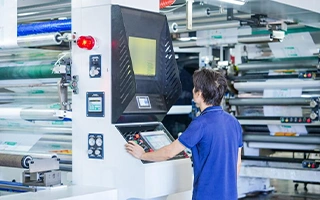
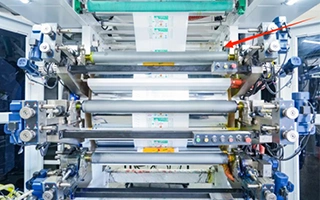
The Central Drum: Eliminating the Root Cause of Misregistration
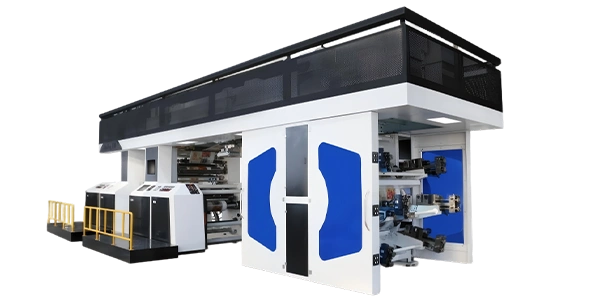
The defining feature of a CI flexo press is a single, large-diameter central impression drum around which all printing stations are arranged. The substrate wraps around this drum and never loses contact with it as it passes through each color station.
Why this matters for print quality:
In stack or inline flexo presses, the substrate travels between independently mounted print stations. Each station introduces its own nip pressure, tension variation, and potential for micro-slippage. On extensible substrates such as LLDPE or CPP—materials with elongation-at-break values often exceeding 400%—even minor variations in nip pressure can cause measurable dimensional distortion. The cumulative misregistration across multiple colors can become significant under production conditions, which is problematic for fine-line graphics or process color blends.
The CI drum eliminates this problem structurally. Because the web is mechanically constrained against the CI drum throughout the entire print sequence, substrate stretch and tension fluctuation between stations is effectively eliminated. Industry benchmarks consistently show CI presses achieving repeat registration tolerances of ±0.1 mm or better across eight colors on extensible films. Modern CI presses equipped with automatic register control systems—using camera-based feedback loops—can maintain registration within ±0.05 mm at speeds exceeding 400 meters per minute.
To explore how different CI press configurations handle various substrate types and production volumes, refer to the CI flexo printing machine series overview for detailed specifications and application guidance.
Thermal Management—The Overlooked Quality Factor
Most discussions of CI press quality focus exclusively on mechanical registration, but thermal management is equally critical. The large-diameter CI drum is internally water-cooled to maintain a precise surface temperature, typically between 20°C and 30°C depending on the substrate and ink system in use.
This controlled cooling serves two interconnected functions:
| Function | Mechanical Effect | Quality Impact |
|---|---|---|
| Prevents thermal expansion | Maintains constant drum circumference | Eliminates registration drift caused by drum diameter changes during long runs |
| Prevents substrate distortion | Counteracts evaporative cooling and heat from drying | Thin PE or PP films avoid localized thermal expansion that causes surface defects |
| Controls ink behavior | Stabilizes ink tack and transfer | Reduces back-trapping onto previously printed stations; improves color laydown and opacity |
Stack flexo presses have no equivalent centralized thermal control mechanism—each print station operates in its own thermal micro-environment, making consistent ink behavior across the color sequence far more difficult to achieve. For flexible packaging applications using heat-sensitive substrates below 25 microns, this thermal stability advantage is a primary selection criterion, not a secondary feature.
For a deeper comparison of flexo press architectures and their respective applications, see the flexo printing technology guide for a comprehensive overview.
Precision Components and Control Systems
While the CI drum provides the mechanical foundation, modern CI presses achieve their exceptional quality through a combination of precision-engineered components and advanced control systems.
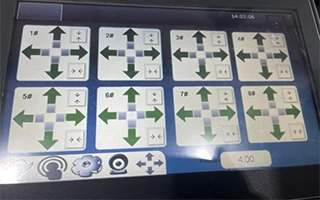
Key enablers of print quality:
-
Servo drive systems with high-resolution encoders – Electronic shaft technology eliminates mechanical backlash and gear slippage, enabling repeatable registration even at very high speeds. RaLoyal's full-servo CI presses feature Heidenhain encoders, achieving ±0.075 mm registration accuracy.
-
Closed-loop tension control – Monitors and adjusts web tension in real time to ensure stable material handling, minimizing printing defects and maintaining precise registration. This is particularly critical for stretchable materials where tension fluctuations would otherwise cause pattern stretching or compression.
-
Enclosed doctor blade systems – Provide stable, consistent ink supply across the full web width, eliminating the variability associated with open fountain systems.
-
Automatic register control – Modern CI presses equipped with camera-based feedback loops can automatically bring the press into perfect register without operator intervention, achieving tight tolerances even at high speeds.
CI Flexo vs. Other Press Architectures—A Quality Comparison
To understand the quality advantage of CI flexo, it helps to see how it compares to alternative architectures:
| Feature | CI Flexo Press | Stack Flexo Press | Inline Flexo Press |
|---|---|---|---|
| Registration accuracy | ≤ ±0.05–0.1 mm | ±0.15–0.5 mm | Moderate |
| Substrate path | Continuous contact with central drum | Vertical travel between stations | Horizontal travel between stations |
| Thermal management | Centralized water-cooled drum | None—each station independent | None—each station independent |
| Typical speed | Up to 500 m/min | 150–250 m/min | 200–400 m/min |
| Best for | Thin films, high-volume flexible packaging | Multi-color jobs, frequent changeovers, paper/board | Integrated finishing, paper and label production |
When to choose CI flexo: If your production involves extensible films, laminates, or any material that stretches under tension, the CI architecture delivers measurably superior print quality. Stack and inline configurations remain viable for dimensionally stable substrates like paperboard or corrugated, where the inter-station substrate path does not pose a significant quality risk.
Real-World Application—High-Quality Flexible Packaging
Consider a converter running eight-color process work on thin PE film for premium food packaging. On a stack press, the cumulative tension variation across multiple stations would likely push registration beyond acceptable tolerances—especially for fine-line graphics or process color blends.
On a CI press, the substrate remains firmly supported by the temperature-controlled drum from the first color to the last. The result: consistent registration, predictable color reproduction, and minimal waste. CI presses are compatible with most common printing materials, including flexible packaging films like PE, BOPP, PET, PVC, kraft paper, coated paper, and synthetic paper. Equipped with a central drum and high-precision tension control and web guiding system, the machine runs stably at high speed within regular thickness range, effectively avoiding material stretching, deviation, and wrinkling.
For application-specific guidance on selecting the right press for your substrate and production requirements, explore the flexible packaging printing solutions page.
Next Steps—From Principles to Selection
Understanding how a CI flexo press improves print quality is the first step. The next is matching the right configuration—color count, web width, speed, and automation level—to your specific production needs. Key decision factors include:
-
Substrate range: What materials will you run? Thinner films demand tighter tension control and thermal stability.
-
Color requirements: How many colors do you need? More colors amplify the registration advantages of CI architecture.
-
Production volume: CI presses excel at high-volume runs where setup time is amortized across long production hours.
-
Available floor space and budget: CI presses require higher capital investment and more floor space than stack or inline alternatives.
Once you have clarified these decision factors, comparing the specific specifications of available options becomes the next logical step. You can review CI flexo press configurations for high-volume flexible packaging applications, or explore inline and stack alternatives for paper-based and label production.
For additional guidance on comparing flexo press types and making an informed equipment decision, read the CI vs Stack vs Inline Flexo Presses guide for a detailed architecture comparison.
Related Reading
-
How to Choose the Right Flexo Press for Food Packaging Applications
-
Flexible Packaging Technology Guide
-
CI Flexo Printing Machine Specifications & Configuration Options
-
Understanding Registration Control in Flexographic Printing