

 Home
Home


For further details, please contact us.
Contact Us
In today's competitive flexible packaging and label industry, printing accuracy and stability are no longer optional advantages, but core standards for surviving high-end market competition. Tiny registration deviations, uneven ink transfer, or unstable web tension will directly lead to mass product rejection, raw material waste, and loss of customer trust.
Traditional mechanical flexo printing machines have long been restricted by gear transmission backlash, mechanical wear, and delayed dynamic response, making it difficult to adapt to multi-color, fine-pattern, and thin-substrate printing needs. With the upgrading of packaging aesthetics and production requirements, servo flexo printing machines have gradually replaced traditional mechanical equipment and become the mainstream choice for modern printing enterprises.
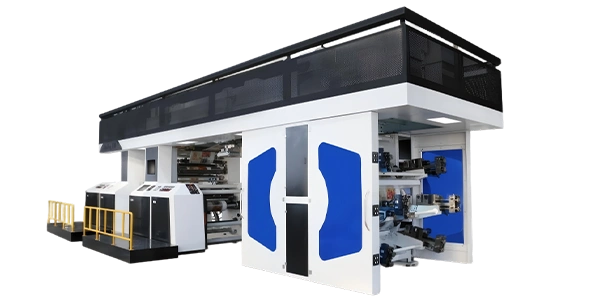
Servo technology realizes independent and precise control of each printing unit through closed-loop motion feedback, completely subverting the working logic of traditional linkage transmission. At Raloyal, we have continuously optimized and iterated Raloyal servo technology for many years, applying it to the full series of flexo printing equipment. It helps global printing users solve pain points such as inaccurate registration, unstable tension, and high scrap rate, and wins market recognition with reliable Technology and credible Trust.
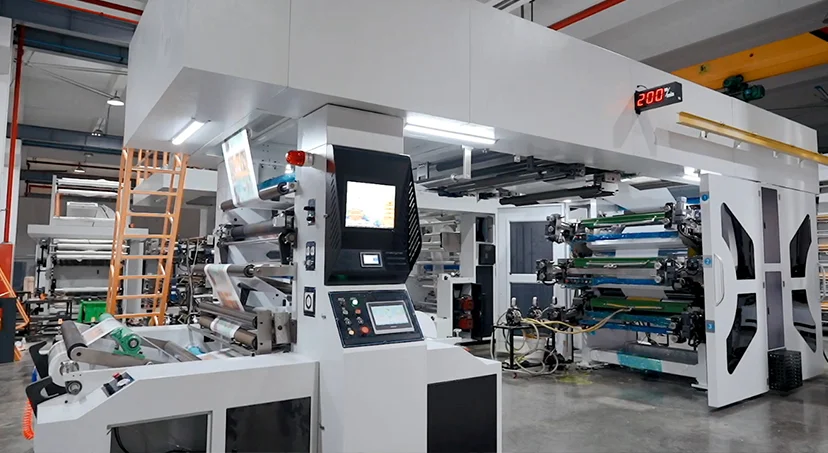
1. Precision Defects of Traditional Gear-Driven Flexo Presses
Most traditional flexo printing machines adopt a central main shaft + gear linkage transmission mode. All printing stations share one power source, which cannot be adjusted independently. This mechanical structure brings three unavoidable precision defects, restricting high-quality printing production:
1.1 Mechanical backlash and cumulative transmission error
Gear meshing will inevitably produce tiny gaps. During equipment startup, speed change, and emergency stop, phase offset will occur between different color groups. With the increase of service time, gear wear is intensified, and the registration error continues to accumulate. Many printers find that traditional machines have obvious color misalignment and pattern deviation after long-term operation, resulting in unstable batch printing quality.
1.2 Fixed gear limits poor production flexibility
The printing repeat length of traditional equipment is limited by fixed gear specifications. When switching different label and packaging patterns, operators need to replace gears repeatedly. This process not only wastes a lot of time and raw materials, but also cannot adapt to the current market demand of multi-variety, short-run and fast-order production, greatly reducing enterprise profitability.
1.3 Unstable tension, easy to deform thin substrates
The unified main shaft cannot independently adjust the tension of unwinding, printing, and rewinding sections. For thin and easily stretched substrates such as BOPP and PET, fluctuating tension is very likely to cause pattern distortion, blurred fine text, and uneven ink laydown, which directly affects the yield of finished products.
In short, the core defect of traditional mechanical flexo presses is dependent mechanical transmission, which cannot realize independent micro-adjustment of each unit. This is also the key breakthrough advantage of servo technology.
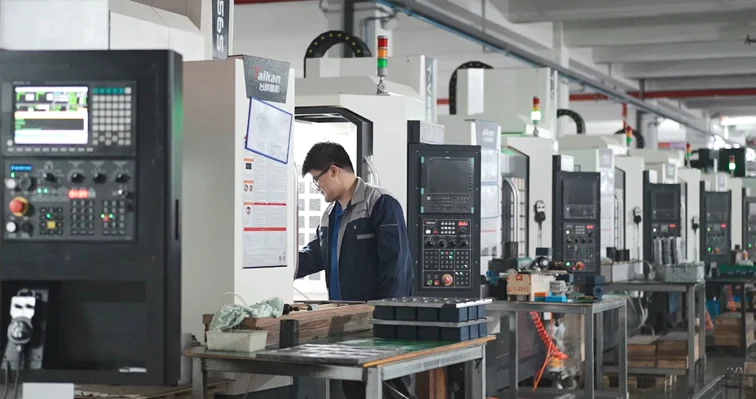
2. Core Mechanisms: How Servo Technology Improves Printing Accuracy
Different from traditional linkage transmission, a servo flexo printing machine is equipped with independent servo motors and high-precision encoders for each printing cylinder, anilox roller, unwinder, and rewinder. Through a fully closed-loop feedback system, the system monitors the position, speed, and phase of each axis in real time and completes millisecond-level automatic correction, fundamentally solving various precision problems of traditional equipment.
2.1 Eliminate gear backlash to achieve stable multi-color registration
Registration accuracy is the core index to measure flexo printing quality. Servo technology completely abandons gear linkage, and each color printing unit adopts electronic synchronous control. There is no mechanical gap and transmission error at all.
Raloyal servo technology adopts high-speed bus synchronous communication technology to ensure consistent phase of each printing axis. Cooperating with the online visual detection system, it can automatically correct tiny registration deviations without stopping the machine. It maintains ultra-high registration stability in the whole speed range, perfectly adapting to high-standard printing scenarios such as cosmetic labels, food packaging and pharmaceutical stickers, and effectively reducing the defective rate.
2.2 Independent closed-loop tension control to protect delicate substrates
Different substrates have completely different tension tolerance ranges. Traditional machines can only realize overall unified tension control, which is easy to cause stretching and deformation of thin films. Raloyal servo system divides the production line into multiple independent tension areas, which can set independent tension values for unwinding, printing, and rewinding units.
Matched with high-sensitivity tension sensors, Raloyal servo technology can instantly absorb tension fluctuations and impact forces, keeping the web material running smoothly and stably. It enables the equipment to stably process various thin, soft, and easily deformable substrates, helping customers expand high-value diversified packaging businesses. For real-world applications across different industries, explore our flexo printing and converting solutions to see how servo technology performs across diverse substrate portfolios.
2.3 Reduce mechanical vibration and stabilize ink transfer
A large number of gear meshing structures of traditional machines will produce continuous vibration during operation, resulting in ink streaks and uneven color density on the printing surface. The servo direct-drive structure simplifies the transmission structure, greatly reducing mechanical vibration during high-speed operation.
The stable operation of the anilox roller and printing plate ensures uniform contact between ink and substrate, presenting delicate color gradients, full solid color, and clear fine lines, and significantly improving the overall printing grade.
3. Raloyal Servo Technology: From Theoretical Advantages to Practical Production Value
Many brands simply pile up servo components, but the actual operation effect is uneven. The core advantage of Raloyal lies in independent algorithm optimization and long-term industrial verification.
With more than 16 years of professional manufacturing experience in printing and packaging equipment, Raloyal deeply understands the actual production pain points of printing factories. Our servo flexo printing machine does not adopt simple assembly, but is equipped with self-developed motion control software and internationally famous brand servo components. After long-duration continuous operation testing before delivery, the equipment can maintain stable high-precision operation for a long time.
Raloyal servo technology effectively avoids the common problems of peer equipment such as long-term running drift, frequent parameter deviation, and difficult maintenance. Overseas customer feedback shows that our equipment still maintains accurate registration and stable operation after years of uninterrupted production, greatly reducing daily maintenance costs and material waste.
Whether it is narrow-web label printing or medium-width flexible packaging production, Raloyal servo flexo machines can deliver stable and efficient production capacity for users, helping customers easily undertake high-end multi-color packaging orders and enhance market competitiveness.
4. Application Scope of Servo Flexo Printing Technology
Many printing factory owners are confused about whether it is necessary to upgrade to servo equipment. In fact, servo technology is not a luxury configuration, but a necessary upgrade for high-quality and profitable production.
If you only focus on low-precision, single-color bulk orders, traditional mechanical equipment can meet basic needs. But if you need to produce multi-color fine patterns, thin film substrates, high-end brand packaging, or frequently switch short-run orders, a servo flexo printing machine is the best choice.
Facing the increasingly strict quality inspection standards of global brand owners, servo high-precision printing is the core threshold for printing enterprises to enter the high-end market. Raloyal's professional technical team can provide customized servo configuration solutions according to the customer's production width, color number, substrate type, and speed requirements.
To dive deeper into how different flexo press architectures incorporate servo technology for specific applications, you may also find our comparison guide on CI vs Stack vs Inline Flexo Presses helpful for understanding which machine configuration best suits your production mix.
Conclusion
Servo technology has completely broken through the precision bottleneck of traditional gear-driven flexo printing. Through eliminating mechanical transmission errors, independent closed-loop tension control, flexible digital parameter adjustment, and low-vibration stable operation, it comprehensively improves the printing accuracy, stability, and production flexibility of flexo machines.
In the era of increasingly fierce packaging market competition, high-precision and high-stability printing equipment is the core competitiveness of printing enterprises. Raloyal will continue to iterate and upgrade Raloyal servo technology, rely on mature technical strength and reliable after-sales service, and build long-term win-win trust relationships with printing enterprises all over the world.