

 Home
Home


For further details, please contact us.
Contact Us
Flexo printing is exceptionally versatile and can print on a wide range of flexible and rigid materials.
Here’s a breakdown of the main categories:
- Plastic Films (Flexible Packaging): A very common application. Supported films include PE, PP, BOPP, PET, PVC, NY (nylon), and CPP. Many modern presses can print on very thin, stretchable films (e.g., 25-30 microns).
- Foil & Laminates: Handles metallic films and aluminum foil well, often used in food packaging and high-end labels.
- Paper & Paperboard: This includes everything from corrugated cardboard (for shipping boxes) and folding cartons to kraft paper, coated paper, and tissue. It's an ideal choice for porous materials.
- Specialty Substrates: The process is also compatible with non-woven fabrics (like for diapers and sanitary products), shrink sleeves, and even cloth.
To get the best results on tricky materials like films or foils, you often need surface pre-treatment (like corona treatment) and specially formulated inks (water-based, solvent, or UV-curable) to ensure proper adhesion.
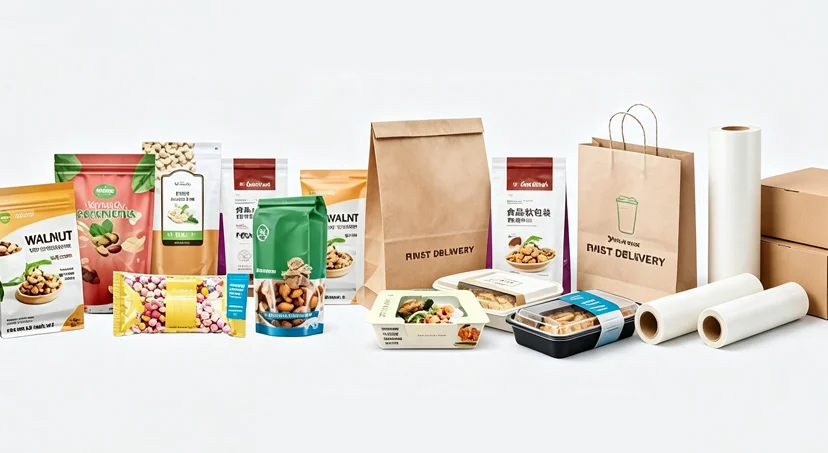
Below are some typical materials that can be printed with Flexo Printing Machines:
| Material | Examples |
| BOPP |
Snack chip bags, candy wrappers, bakery twist-wrap, and laminated labels for bottled water (often used as the outer print layer over other films). |
| PET (Polyester) |
Microwaveable food trays (lidding film), shrink-sleeve labels for beverage bottles, metallic-looking gift wrap, and high-strength pouches for coffee or pet food. |
| PE (Polyethylene) |
Grocery shopping bags, T-shirt bags, stretch hooder film for pallet wrapping, Ziplock-style food storage bags, and heavy-duty sack packaging for fertilizers or animal feed. |
| Paper |
Corrugated shipping boxes (Amazon-style), cereal and dry-good cartons, cupcake baking cups, butcher/wax paper, and self-adhesive label stock for jam jars or wine bottles. |
| Non-Woven |
Reusable tote shopping bags, medical sterilization wraps, disposable hospital gowns, dryer fabric-softener sheets, and the outer cover of baby diapers or feminine hygiene products. |
| Foil (Metallized/Aluminum) |
High-end chocolate bar wrappers, coffee capsule lids (e.g., Nespresso), insulated pharmaceutical blister packs, and wine bottle neck labels with a shiny metallic finish. |
Quick Tip: On non-porous materials like BOPP, PET, and Foil, the ink sits on the surface, so you'll almost always need corona/plasma treatment and UV or solvent-based inks to prevent smudging. On porous paper and non-woven, standard water-based inks work perfectly and absorb right in.
Key Industry Patterns:
- Food packaging → BOPP, PET, Foil (barrier against moisture/oxygen)
- Retail labels → BOPP, Paper (high print quality + cost options)
- Medical/Hygiene → Non-woven, PE (sterile, disposable, breathable)
- Shipping/Logistics → Paper (corrugated), PE heavy-duty sacks
Some notes for printing these materials when the application is as follows
BOPP
Why: High clarity, stiffness, moisture barrier.
Print notes: Needs corona treatment + solvent/UV inks. Low stretch, runs fast.
PET
Why: Heat-resistant, strong, excellent dimensional stability.
Print notes: Requires surface pre-treatment. Shrink grades need special annealing.
PE
Why: Flexible, cheap, sealable. Most common packaging film.
Print notes: Soft & stretchy — needs precise tension control. Water-based inks possible for surface print.
Paper
Why: Biodegradable, low cost, absorbs ink naturally.
Print notes: Easiest to print. Water-based inks work great. Surface smoothness varies greatly (kraft vs. coated).
Non-Woven
Why: Breathable, tear-resistant, disposable.
Print notes: Fibrous surface — uses more ink. Low heat drying required to avoid melting.
Foil
Why: 100% moisture/oxygen/light barrier — premium look.
Print notes: Zero absorption — must use UV or solvent inks with strong adhesion promoters.
Here is a direct side-by-side comparison of these 6 flexo materials across 8 critical parameters — perfect for study or vendor selection:
| Parameter | BOPP | PET | PE | Paper | Non-Woven | Foil |
| Surface Energy | Low (needs corona) | Low (needs corona) | Very Low (needs corona) | High (no treatment) | Medium (often needs flame treat) | Very Low (needs primer) |
| Ink Absorption | None | None | None | High (absorbs fast) | Medium (fibrous) | None |
| Best Ink Type | Solvent or UV | Solvent or UV | Solvent/UV or Water-based * | Water-base | Water-based | UV or Solvent |
| Stretch/Tensi on Sensitivity | Low (stable) | Very Low (rigid) | Very High (soft) | Medium (tears easily) | High (frays) | Low (but creases) |
| Heat Resistance | Good (130°C) | Excellent (150°C+) | Poor (~80°C) | Good (burns) | Poor (melts) | Excellent |
| Barrier Properties | Good (moisture) | Excellent (gas/oxygen) | Good (moisture) | Poor | Poor | Perfect (light/oxygen) |
| Print Speed Potential | Very Fast | Fast | Medium (tension limits) | Very Fast | Medium | Fast |
Key trade-offs to memorize:
PE vs BOPP: PE is cheaper & more flexible, but BOPP prints sharper and runs faster on press.
Paper vs Film: Paper is easiest (no pre-treat, water-based inks) but offers zero moisture barrier — films outperform for shelf life.
PET vs Foil: PET is almost as good as foil for barrier but cheaper and less prone to creasing — foil is chosen only for premium "metal look" or absolute oxygen block.
Non-Woven vs All: Unique for breathability — you sacrifice print sharpness and speed, but it's the only choice for hygiene/medical disposables.
Here's the defect comparison for each material — know these, and you'll understand exactly what goes wrong and why on press:
| Material | Common Defects | Root Cause | Fix |
| BOPP | Pinholing (tiny unprinted dots) | Insufficient corona treatment or ink too viscous | Increase corona wattage; reduce ink viscosity |
| BOPP | Ink scuff/scratch | Poor adhesion on slick surface | Switch to UV ink; add adhesion promoter |
| PET | Delamination (layers separate) | High drying heat causes film shrink | Lower oven temp; use low-shrink PET grade |
| PET | Static streaks (fine lines in solid areas) | Static charge attracts dust | Add anti-static bars; ground press |
| PE | Stretch distortion (images elongate) | Tension too high on soft film | Reduce unwind/rewind tension; use chill rolls |
| PE | Gear marks (repeating pattern) | Film gauge variation + softness | Check film thickness spec; slow press speed |
| Paper | Dot gain (print looks too bold/dark) | Ink absorbs too much into fibers | Use coated paper; increase ink viscosity |
| Paper | Linting (white spots from paper fibers) | Poor surface strength | Use harder anilox; add anti-static; switch to smoother grade |
| Non-Woven | Ink strike-through (shows on back) | Fibrous + absorbent — ink bleeds through | Use faster-drying ink; reduce ink volume |
| Non-Woven | Fuzzing/pilling (fuzzy edges on text) | Fibers lift during printing | Use sharper doctor blade; softer impression roller |
| Foil | Cracking (ink splits at folds) | Ink too brittle on non-absorbent surface | Add plasticizer to ink; use UV-flexo with elongation |
| Foil | Orange peel (bumpy metallic finish) | Primer unevenly applied | Recoat primer; use smoother anilox |
Auxiliary Materials — Inks and Plates Are Equally Critical
Selecting the right substrate is only half the battle. Two other variables directly determine final print quality:
Ink Systems
- Water-based inks: Used for paper and non-woven materials. Environmentally friendly but slow to dry.
- Solvent-based inks: Used for plastic films. Good adhesion but require solvent recovery systems.
- UV-curable inks: Instant curing, ideal for non-absorbent materials. Low energy consumption, but the highest cost among the three.
Photopolymer Plates
- Hard plates: Used for fine-dot label printing requiring high definition.
- Soft plates: Used for rough surfaces like corrugated board, effectively wrapping around uneven areas.
For real-world production, matching ink and plate choices to your specific substrate mix is critical — explore our flexible packaging solutions to see how different configurations handle diverse material portfolios.
In summary, flexographic printing is characterized by its exceptional versatility in both substrate compatibility and end-use applications. Flexo is the "Translator of Materials"
Flexographic printing cannot outperform offset printing in clarity, nor gravure printing in dense ink laydown. However, its greatest strength lies in "translating" the language of different materials — making paper breathe, films pop, foils shine, and non-wovens come alive.
With the rise of mono-material eco-friendly packaging (such as MDO-PE and paper-based composites), flexo — thanks to its exceptional material compatibility — will secure an even more central position in the future packaging market. Understanding materials is understanding the soul of flexography.
To dive deeper into how different flexo press architectures handle specific substrates, you may also find our comparison guide on CI vs Stack vs Inline Flexo Presses helpful for choosing the right machine for your material mix.